How to Cycle a Shrimp Tank: A Step-by-Step Fishless Cycle
Learn how to cycle a shrimp tank without fish: what the nitrogen cycle is, how long it takes, which tests to use and when it's safe to add shrimp.
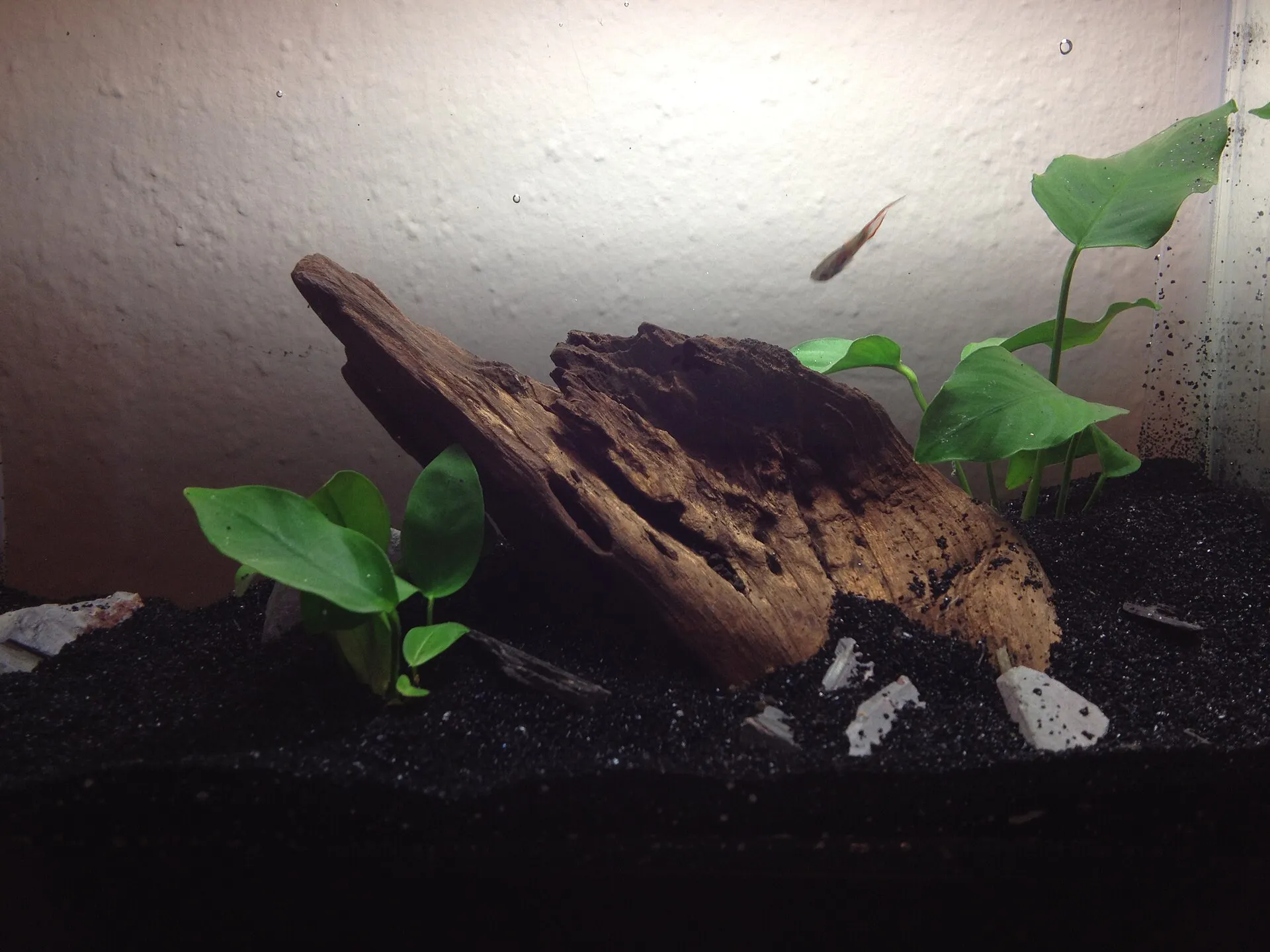 Photo: Tdwittt, CC0
In this guide
Short answer: add a source of ammonia to the empty tank, keep the filter running and test every few days. The tank is cycled when it can turn 2 ppm of ammonia into 0 ppm ammonia and 0 ppm nitrite within 24 hours. That usually takes 4–8 weeks. For shrimp, wait another 2–4 weeks for biofilm to grow before you add them.
What “cycling” actually means
Fish, shrimp and rotting food all produce ammonia, which is toxic. In a cycled tank, two groups of bacteria living in the filter and substrate deal with it:
- The first group turns ammonia into nitrite, which is also toxic.
- The second group turns nitrite into nitrate, which is far less harmful and is removed with water changes.
A new tank has almost none of these bacteria. Cycling means growing enough of them before any animals go in. Shrimp are more sensitive to ammonia and nitrite than most fish, so skipping this step is one of the main reasons cherry shrimp die in new tanks.
What you need
- A tank with substrate, filter and heater (if you use one) running
- An ammonia source: pure ammonia without soap or perfume, an ammonium chloride solution sold for cycling, or a pinch of fish food
- A liquid test kit for ammonia, nitrite and nitrate
- Optional: bottled bacteria, or a used sponge or some substrate from an established, healthy tank
Step-by-step fishless cycle
1. Set up the tank completely
Add substrate, hardscape, plants and water, and dechlorinate it. Start the filter and leave it running around the clock from now on. The bacteria live on surfaces with water flowing over them, so the filter should never be switched off for long.
2. Add ammonia to about 2 ppm
Dose your ammonia source and test after an hour. Aim for around 2 ppm. For a small shrimp tank you don’t need more than that. If you use fish food, add a small pinch every day or two and let it rot.
3. Test every 2–3 days
Write your results down. You’ll usually see this pattern:
| Stage | Ammonia | Nitrite | Nitrate |
|---|---|---|---|
| Week 1–2 | High | 0 | 0 |
| Week 2–4 | Falling | Rising | Starting to appear |
| Week 3–6 | 0 | High, then falling | Rising |
| Cycled | 0 within 24 h | 0 within 24 h | Present |
4. Top up ammonia when it reaches zero
Once ammonia drops to 0, dose back to about 2 ppm so the bacteria keep eating. Nitrite often stays high for a while. This is the stage where most people give up. Be patient.
5. Do the 24-hour test
When you can dose 2 ppm ammonia and read 0 ammonia and 0 nitrite the next day, the cycle is complete.
6. Do a water change and let the tank mature
Do a large water change to bring nitrate down, then keep feeding the tank a little ammonia or food. For shrimp, give it extra time. They graze on biofilm and algae, and a tank that has run for 6–8 weeks gives far better survival than one that was “just” cycled.
How to speed it up
- Seed the filter. A squeezed-out sponge or a handful of substrate from a healthy tank is the fastest way to get the right bacteria.
- Use bottled bacteria. Results vary by brand, but they can help. Keep testing either way.
- Keep the water warm. The bacteria grow faster at around 25–28 °C. You can lower the temperature before adding shrimp.
- Don’t over-dose ammonia. Very high levels (above 4–5 ppm) can slow the process down.
When it’s safe to add shrimp
Check all of these before you buy:
- Ammonia and nitrite read 0 ppm for at least a week, with some food going in
- Nitrate is under 20 ppm
- pH, GH and KH are stable and in range. Use our Water Parameter Checker
- You can see a thin layer of biofilm or soft algae on glass and decorations
Then acclimate the shrimp slowly and start with a small group.
Frequently asked questions
How long does it take to cycle a shrimp tank?
Usually 4–8 weeks without any help. Seeding with media from an established tank can cut it to 1–2 weeks. For shrimp, plan on 6–8 weeks in total so the tank also has time to grow biofilm.
Can I cycle a tank with plants only?
A heavily planted tank absorbs some ammonia, which helps, but you still need nitrifying bacteria. Test anyway. Don’t assume a planted tank is cycled.
Why is my nitrite stuck high?
This is normal in the middle of a cycle. The nitrite-eating bacteria grow more slowly. Keep dosing ammonia at a lower level, check that pH hasn’t dropped below 6.5 (the bacteria slow down in acidic water) and wait.
Does the tank stay cycled if I leave it empty?
Only if the bacteria keep getting food. Add a small amount of ammonia or fish food every few days until the shrimp arrive.