Best Food for Cherry Shrimp: Types, Brands and How Much to Feed
What to feed cherry shrimp (Neocaridina): biofilm, shrimp pellets, mineral foods, baby powders, vegetables and leaf litter, popular brands described, the copper question and how often to feed.
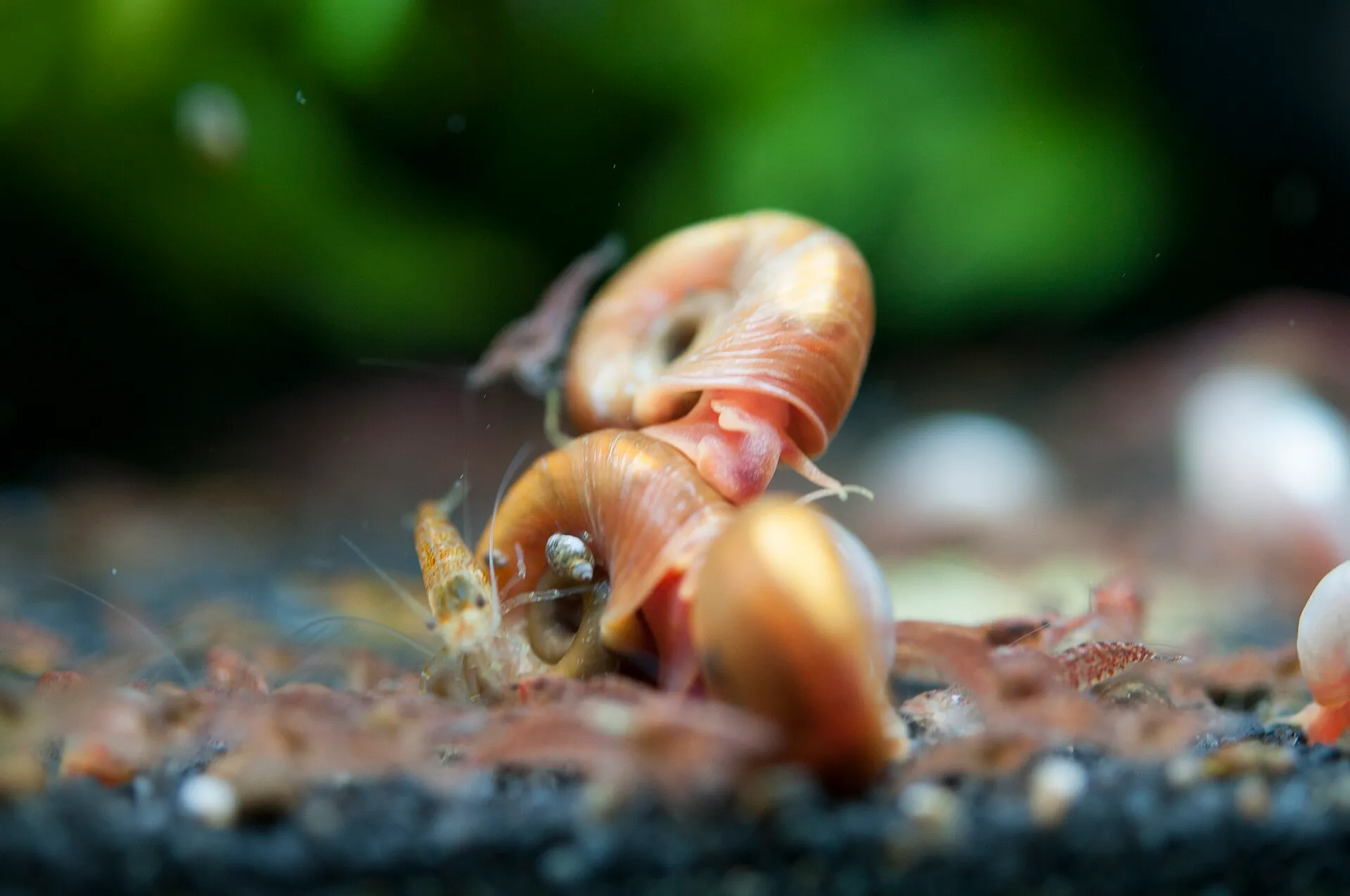 Photo: Uccio D'Agostino, CC BY 4.0
In this guide
Short answer: the best food for cherry shrimp is the biofilm and algae that grow in a mature tank, so no single product is “best”. On top of that, a good routine is a shrimp-specific pellet or stick as the staple, a mineral food for molting, blanched vegetables and leaf litter for variety, and a powdered food if you have babies. Feed small amounts, only what they eat in 2–3 hours, a few times a week. Overfeeding causes more problems than underfeeding.
What cherry shrimp eat naturally
Cherry shrimp (Neocaridina davidi) are scavengers that graze almost nonstop. Aquarium Breeder cites gut analyses of dwarf shrimp that found detritus in 93% of guts, algae in up to 65% and biofilm in 30–85%. Shrimp Science calls biofilm the vast majority of their natural diet.
Biofilm is the almost invisible layer of bacteria, algae and fungi on every surface in the tank. It grows even without light. To grow more of it, Shrimp Science suggests plenty of hardscape and moss, leaf litter, and not vacuuming the substrate too often. That’s why a tank that has run for a few months feeds shrimp, especially babies, much better than a new one. Read more in what do cherry shrimp eat.
Types of shrimp food
| Food type | What it’s for | How often (typical) |
|---|---|---|
| Shrimp pellets or sticks | Balanced staple | A few times a week |
| Mineral food | Calcium and minerals for molting | Every 2–3 days or weekly, depending on water |
| Powdered food | Baby shrimp, biofilm boost | Small amounts, 2–3 times a week |
| Blanched vegetables | Variety, fiber | Once or twice a week |
| Leaf litter (catappa, oak) | Grows biofilm, slowly eaten | Always a leaf or two in the tank |
| Snowflake food (soy husk) | Grows fungus that shrimp graze; doesn’t foul water | About weekly |
| Frozen or live protein | Occasional treat | Rarely |
Pellets and sticks: the staple
A food made for dwarf shrimp is the easiest base. Shrimp Science names Dennerle Shrimp King Complete and Hikari Shrimp Cuisine as good choices. Shrimp-specific foods usually contain more plant matter, limited protein and added calcium compared with fish food. Aquarium Breeder warns against foods above about 45% protein, which it links to molting problems, and suggests rotating at least three different products.
Mineral foods for molting
Shrimp need calcium and other minerals to build a new shell each time they molt. Mineral foods such as GlasGarten Mineral Junkie Bites or Dennerle Shrimp King Mineral are high in minerals; GlasGarten suggests feeding its bites every 2–3 days, alongside the main food. Aquarium Co-op suggests mineral-rich foods like Zoo Med Nano Banquet blocks as a regular part of the diet when your tap water is very soft. If you see molting trouble, see shrimp molting problems.
Powdered food for babies
Fine powders reach shrimplets that can’t compete for pellets. GlasGarten Bacter AE contains bacteria, enzymes and amino acids meant to boost biofilm.
Here sources clearly disagree on dose. The manufacturer suggests up to one small spoon per 120 L daily in a normally stocked tank, but Aquarium Breeder suggests about a quarter of the recommended dose, 2–3 times a week. Shrimp Science warns that too much can cause a bacterial bloom that uses up oxygen; shrimp gasping at the surface or trying to climb out are warning signs. Start low.
Vegetables
Blanched zucchini, cucumber, spinach, kale or broccoli are classic treats. Shrimp Science suggests organic produce because of pesticides: wash it, blanch until soft, cool it, and remove leftovers within a few hours. The Shrimp Farm suggests about 2–3 minutes for leafy greens and longer for harder vegetables like carrot and zucchini.
Leaf litter
Indian almond (catappa) leaves and oak leaves grow biofilm, release tannins and are slowly eaten. Aquarium Co-op suggests about one catappa leaf per 20 gallons and says you can leave the old leaf, since shrimp eat it. The Shrimp Farm suggests boiling leaves before use.
Protein
Frozen or live brine shrimp, daphnia and bloodworms are eaten eagerly. Aquarium Breeder treats them as occasional treats, and Shrimpy Business warns that too much protein can cause molting problems.
Popular brands at a glance
| Product | What it is (per manufacturer or retailer) |
|---|---|
| Hikari Shrimp Cuisine | Tiny disc pellets for Caridina and Neocaridina, mostly seaweed and spirulina; at least 35% protein |
| Dennerle Shrimp King Complete | Sinking sticks for daily feeding, with leaves and bark fibers; no fish meal |
| Dennerle Shrimp King Mineral | Mineral sticks for molting |
| GlasGarten Mineral Junkie Bites | Soft mineral sticks, about 27% ash (minerals) and 4% protein |
| GlasGarten Bacter AE | Micro powder with bacteria and enzymes to boost biofilm |
| Fluval Bug Bites Shrimp | Small granules based on black soldier fly larvae, with added calcium |
| Repashy Soilent Green | Gel food mixed from powder; plant and algae based, stays stable in water for hours |
| Snowflake food | Soybean husk pellets that grow fungus shrimp graze |
We couldn’t load the Dennerle and Fluval product pages directly, so check the current labels before you buy.
Does shrimp food contain copper?
Some does, and the sources disagree on whether that matters:
- Avoid it: The Shrimp Farm says any food containing copper should not be used, and points out that copper sulfate is a common fish food ingredient. Read labels on fish foods especially.
- Trace copper is fine: Hikari adds copper to Shrimp Cuisine on purpose, and Aquarium Co-op explains that shrimp need trace copper for hemocyanin, the copper-based pigment that carries oxygen in their blood. JBL makes the same point: copper is essential in small amounts and toxic in high concentrations.
We found no studies on dietary copper limits for cherry shrimp. The copper dangers most often reported are medications, algaecides, fertilizer overdoses and copper pipes, not shrimp-specific foods. See shrimp-safe fertilizers.
Can food improve color?
Shrimp can’t make red and orange pigments (carotenoids) themselves and must get them from food. Two 2024 lab studies support this:
- A Taiwanese study fed red cherry shrimp diets with astaxanthin for 56 days. Their color improved compared with the control, and the shrimp also held their color better under low oxygen stress.
- A Mexican study fed juveniles live microalgae for 31 days: red shrimp colored up most on Haematococcus pluvialis (an astaxanthin-rich alga), blue shrimp on spirulina.
These were lab formulations, not tests of commercial brands, but they explain why many shrimp foods add astaxanthin or algae. Genetics (the grade you buy) still matters most.
How often and how much to feed
Sources range widely:
| Source | Frequency |
|---|---|
| The Shrimp Farm | Once a day |
| Shrimp Science | Daily to every 2–3 days; less in a well-aged tank |
| Aquarium Breeder | About 5 days a week in a bare tank, 2–3 in a planted tank |
| Shrimpy Business | 2–3 times a week |
The common rule: feed only what disappears in about 2–3 hours. Aquarium Breeder suggests a fingernail-sized pinch per 10–20 shrimp: if food is left after 3 hours, feed less; if it’s gone in under an hour, feed a little more. In a planted, mature tank, a few times a week is usually enough.
A feeding dish (glass or ceramic) keeps food in one place so leftovers are easy to remove. It’s especially useful if fish share the tank.
Fasting is fine. Aquarium Breeder’s sample schedule includes two days without food a week, and both it and Shrimp Science say healthy shrimp in a mature tank can go a week or more without added food, for example while you’re on holiday.
Signs you’re overfeeding
Aquarium Breeder calls overfeeding one of the biggest causes of shrimp deaths. Watch for:
- Food still lying around hours later
- Rising ammonia or nitrate
- Planaria, hydra or a boom of pest snails
- Cloudy water (see cloudy water in a shrimp tank)
If you see these, cut back and remove leftovers. When in doubt, underfeed.
Frequently asked questions
What is the best food for cherry shrimp?
Biofilm and algae in a mature tank, plus a shrimp-specific pellet or stick as a staple. Add a mineral food, blanched vegetables and leaf litter for variety.
How often should I feed cherry shrimp?
A few times a week in a planted, mature tank, more often in a bare tank. Feed only what they finish in 2–3 hours.
Can cherry shrimp eat fish food?
They’ll eat it, but many fish foods are high in protein and some contain copper sulfate. A food made for shrimp is a safer staple.
What do baby cherry shrimp eat?
Mostly biofilm. Fine powdered foods help them too, but use small amounts to avoid fouling the water.
Sources
- What do freshwater shrimp eat? The essential feeding guide (Shrimp Science)
- Growing biofilm in shrimp tanks (Shrimp Science)
- How and what to feed your shrimp (Aquarium Breeder)
- Cherry shrimp feeding (The Shrimp Farm)
- 5 best foods for freshwater aquarium shrimp (Aquarium Co-Op)
- Shrimp Cuisine (Hikari)
- GlasGarten Bacter AE (Aquasabi)
- GlasGarten Mineral Junkie Bites (Aquasabi)
- Are aquarium fertilisers with trace elements dangerous for shrimps? (JBL)
- Enhancing the color and stress tolerance of cherry shrimp using astaxanthin and Bidens pilosa (Hou et al., PLoS ONE 2024)
- The coloration of Neocaridina davidi fed with live microalgae (Luna-Vivaldo et al., Lat. Am. J. Aquat. Res. 2024)