How Often Do Shrimp Molt? Frequency, Signs and Hiding Time
How often cherry, Caridina and Amano shrimp molt at different ages, what speeds it up, how long shrimp hide after molting and whether to remove the old shell.
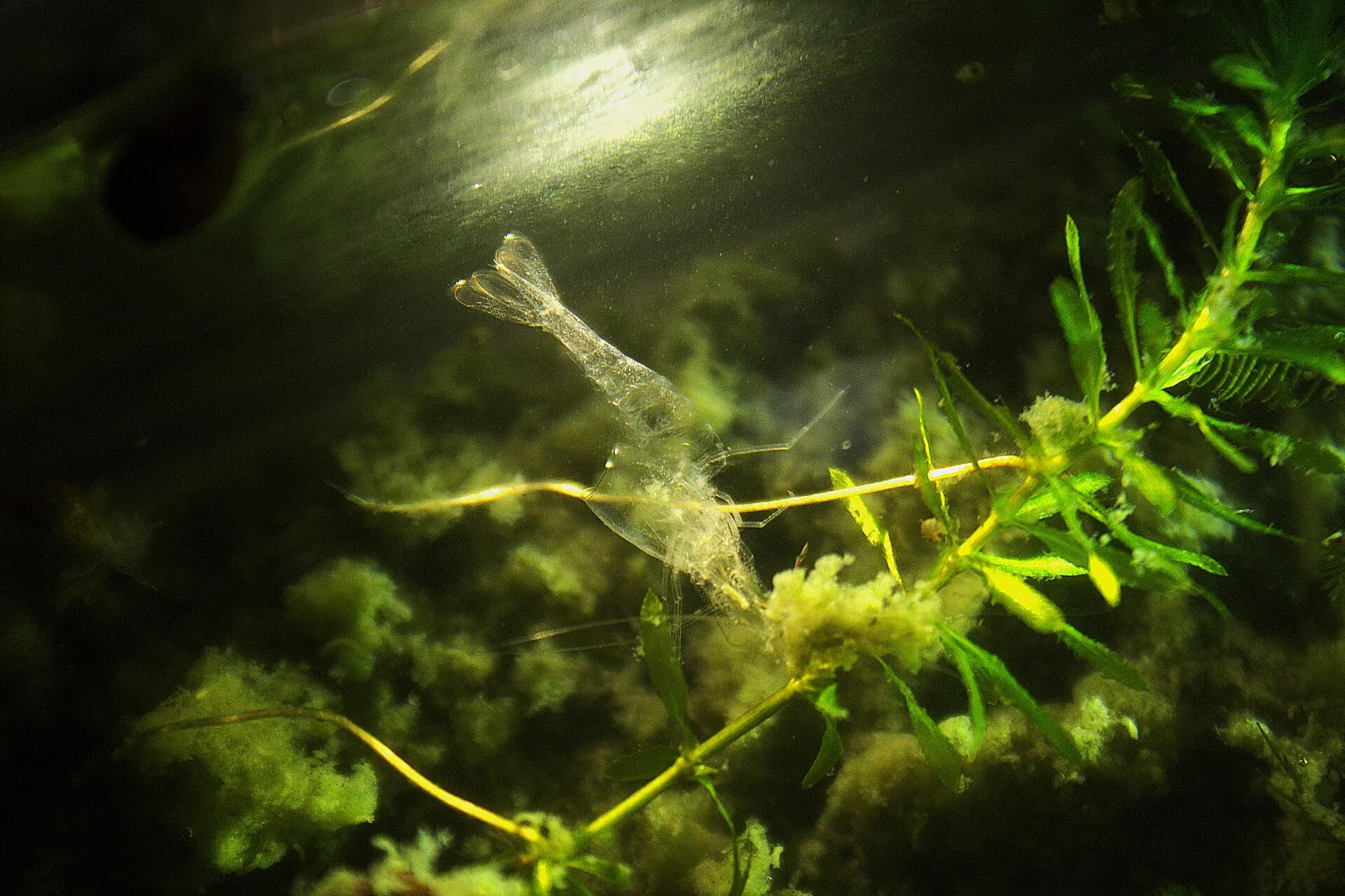 Photo: Nafisathallah, CC BY-SA 4.0
In this guide
Short answer: most hobby sources say adult dwarf shrimp molt roughly every 3–6 weeks, while babies and young shrimp molt much more often, from every few days to every week or two. Amano adults molt about every 1–2 months. Growth, food and water conditions change the pace. After molting, a shrimp usually hides for about a day or two while its new shell hardens. Leave the old shell in the tank: shrimp eat it to recover minerals.
How often shrimp molt by age
| Shrimp | How often (approximate) | Sources |
|---|---|---|
| Cherry shrimp babies | First molt about a day after hatching, then every few days | Aquarium Breeder, The Shrimp Farm |
| Young / growing shrimp | About every 4–10 days to every 1–2 weeks | Aquarium Breeder, Shrimp Science |
| Adult Neocaridina and Caridina | About every 3–6 weeks | Shrimp Science, The Shrimp Farm, Aquarium Breeder |
| Adult Amano shrimp | About every 1–2 months | Aquarium Breeder |
These numbers are estimates from shrimp keepers, not measured averages, and the sources differ. There’s very little research on dwarf shrimp molting. The one measured figure we found comes from a conference abstract by researchers at Colorado State University: adult male cherry shrimp kept at 23 °C (73 °F) molted about every 10 days. That’s faster than most hobby estimates, probably because those were well-fed, still-growing animals in lab conditions. So don’t worry if your shrimp molt more or less often than the table says.
Why shrimp molt
A shrimp’s shell (exoskeleton) can’t stretch. To grow, the shrimp builds a new, soft shell underneath, splits the old one between the head and body, and pulls itself out. The molt itself takes only seconds; Aquarium Breeder puts it at about 10–15 seconds. Molting also lets shrimp regrow lost legs or antennae.
Researchers describe a cycle of stages: premolt (building the new shell), the molt, postmolt (the new shell hardening) and intermolt (the time in between). Growing shrimp spend less time between molts, which is why young shrimp molt so often.
What changes how often they molt
- Age and growth: the main factor. Molting slows as shrimp reach full size.
- Food: Aquarium Breeder reports the molt cycle of young shrimp varied from 4 to 10 days depending on diet. Poorly fed shrimp may struggle to build a new shell.
- Temperature: warmth generally speeds up growth in crustaceans up to a point. A study on Neocaridina heteropoda found temperature affected growth, but it didn’t measure molting directly. Hobby sources also say sudden temperature changes can trigger molts.
- Water changes: many keepers notice molts after a water change. That’s a common observation, not a proven rule. Large or badly matched water changes can also cause failed molts, so keep changes small and steady (The Shrimp Farm suggests about 10% weekly, never more than 20%).
- Breeding: females molt just before mating, because the fresh shell is soft and lets them carry eggs. After this molt they release scents that send the males searching. Keepers also commonly report a molt after a female releases her babies, though we couldn’t find a firm source for that.
Signs a shrimp is about to molt
According to Shrimp Science and Aquarium Breeder:
- It sits still for long periods, sometimes an hour or more
- It eats less
- Its color looks muddy or dull, and you may see the new shell under the old one
- It scratches at its back
One quiet shrimp is normal. Many shrimp sitting still at once is a reason to test your water.
How long do shrimp hide after molting?
Sources give anything from about 12 hours to a few days. The Shrimp Farm says shrimp usually curl up in a hiding place for 1–2 days. During this time the new shell is soft and the shrimp is an easy target for fish and even other shrimp, so plenty of plants and hides help.
Should you remove the molt?
Usually not. Shrimp eat old shells to recover minerals, and the shell is largely calcium carbonate, chitin and protein. Aquarium Breeder notes that eating it isn’t strictly necessary, because most minerals come from the water and food. Still, there’s no reason to take it out.
Remove a molt only if it grows mold, or if your shrimp have parasites such as Scutariella japonica. An empty molt can look like a dead shrimp; see shrimp molt or dead shrimp for how to tell them apart.
When molting goes wrong
Finding a molt is a good sign. Watch out for:
- The white ring of death: a white band behind the head where the shell splits all the way around. The shrimp often gets stuck and dies.
- Shrimp dying during or right after a molt.
- Berried females molting and losing their eggs, which Aquarium Breeder links to water problems.
The usual causes are GH too low or too high, sudden water changes, poor food, and ammonia or nitrite. Our guide to shrimp molting problems explains each one, and cherry shrimp water parameters lists the target ranges. Our water parameter checker can help you check your test results.
Frequently asked questions
How often do cherry shrimp molt?
Adults roughly every 3–6 weeks according to most keepers; young shrimp much more often, from every few days to every couple of weeks.
Is it normal to find a molt every day?
In a colony, yes. With many shrimp molting every few weeks, and young ones more often, finding a shell most days is normal.
Why do shrimp hide after molting?
Their new shell is soft for a while, so they’re vulnerable. They usually hide for a day or two until it hardens.
Do shrimp eat their molts?
Yes. They pick at the old shell over a few days to recover minerals, so leave it in the tank.
Sources
- Characterization of the molt cycle of the cherry shrimp, Neocaridina davidi (Kelleher & Mykles, SICB abstract)
- Molting and common problems (Shrimp Science)
- Failed molting in shrimp (The Shrimp Farm)
- Molting process and metabolism of dwarf shrimp (Aquarium Breeder)
- Breeding and life cycle of Amano shrimp (Aquarium Breeder)
- Breeding and life cycle of red cherry shrimp (Aquarium Breeder)
- Neocaridina davidi (Wikipedia)
- Effect of temperature on growth in Neocaridina heteropoda (Tropea et al., PLoS ONE 2015)