Best Tank Mates for Cherry Shrimp (and Fish to Avoid)
Which fish, snails and shrimp can live with cherry shrimp, what makes a tank mate shrimp-safe, and which popular fish will eat your shrimp.
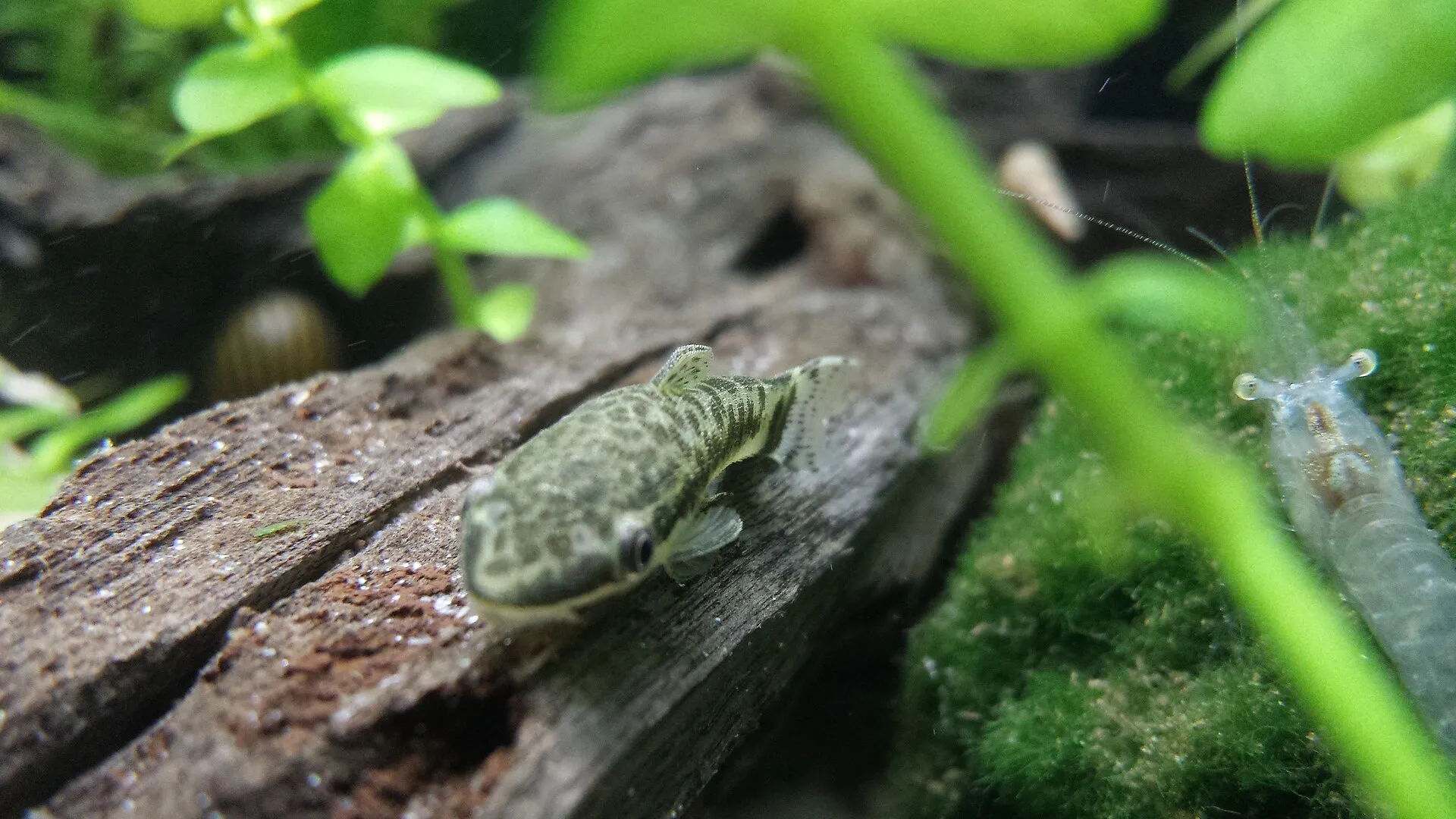 Photo: Evan Baldonado, CC BY 4.0
In this guide
Short answer: the safest tank mates for cherry shrimp are snails (nerite, mystery), other peaceful shrimp (Amano) and small algae eaters like Otocinclus. Tiny peaceful fish such as chili rasboras, ember tetras, pygmy corydoras and celestial pearl danios usually leave adult shrimp alone, but almost any fish will eat baby shrimp it can catch. If you want the colony to grow fast, add thick moss or keep a shrimp-only tank.
What makes a tank mate shrimp-safe
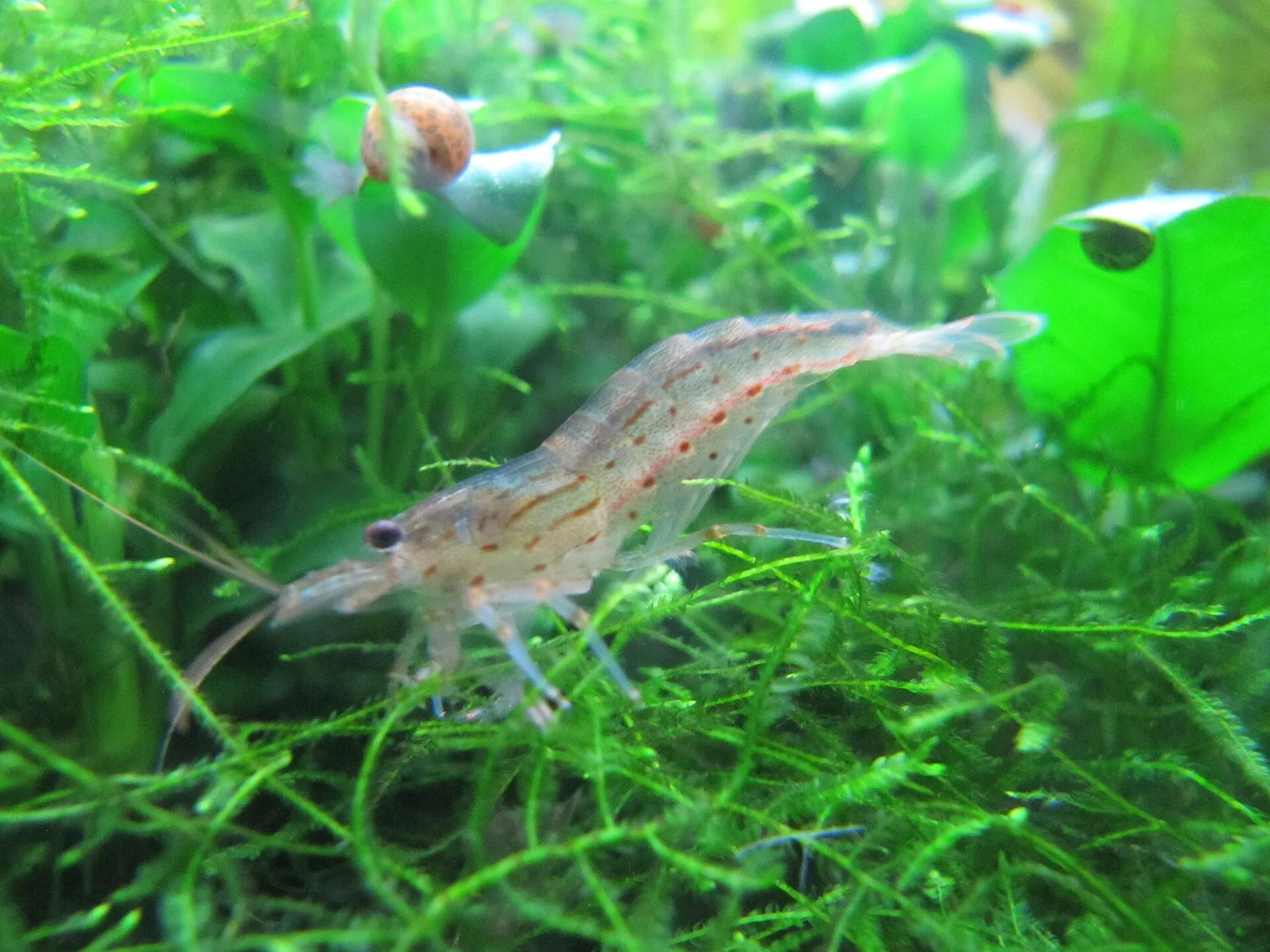
Adult cherry shrimp (Neocaridina davidi) usually reach only about 2–3 cm (up to about 4 cm), and babies are a few millimeters long. A good tank mate is:
- Small, with a small mouth. If a fish can fit a shrimp in its mouth, sooner or later it will try.
- Peaceful. Fin-nippers and territorial fish chase and stress shrimp even if they can’t eat them.
- Not food-aggressive. Fast eaters like zebra danios grab all the food and keep shrimp hiding.
- Happy in similar water. Cherry shrimp do best in stable, moderately hard water; see our cherry shrimp water parameters guide.
The safest tank mates
Snails
Nerite snails and mystery snails don’t hunt shrimp. They do compete for algae and leftovers, so feed enough for everyone. Ramshorn and bladder snails are common in shrimp tanks too.
Amano shrimp
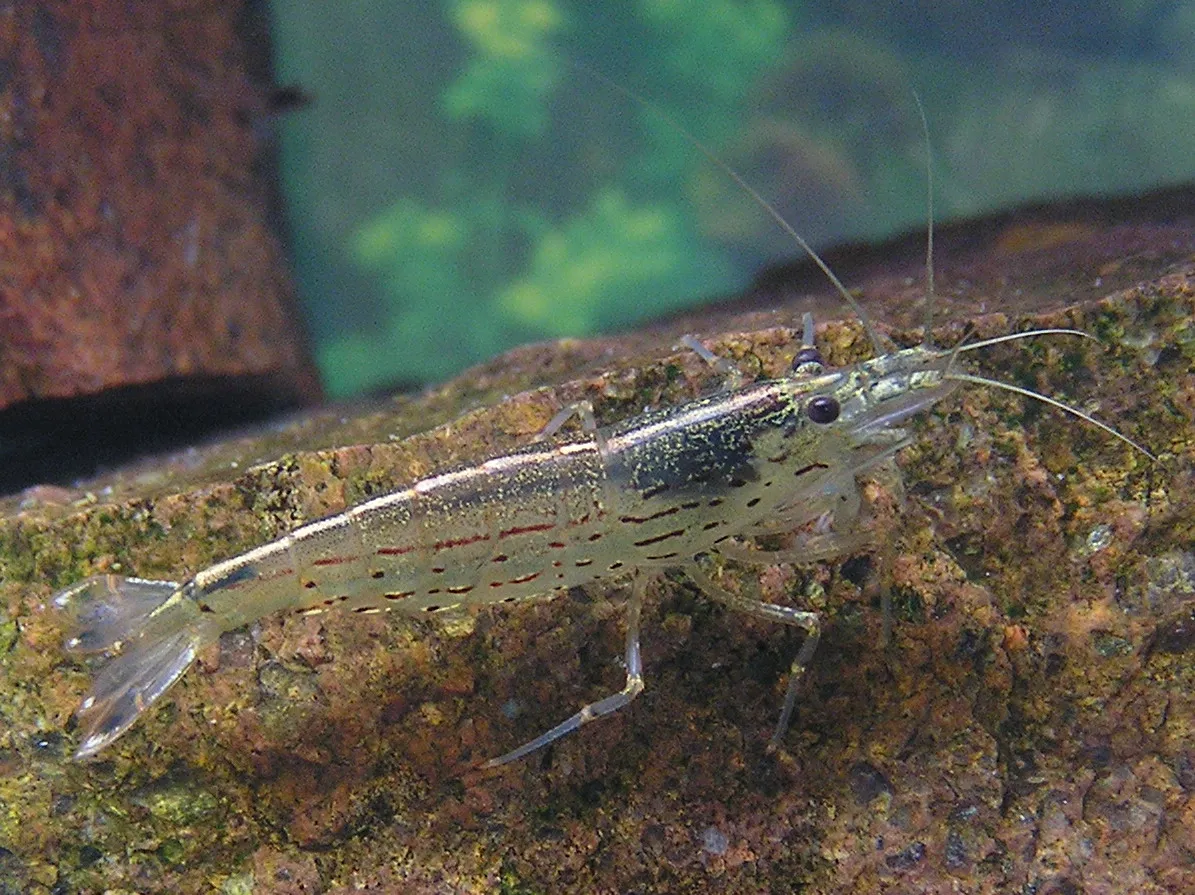
Amano shrimp share the same water needs, eat algae and leave cherry shrimp alone. They also don’t breed in freshwater, so they won’t take over. See Amano shrimp vs cherry shrimp.
Otocinclus
These small, peaceful catfish eat algae and biofilm. Aquarium Co-op notes they’re slow eaters that are unlikely to outcompete shrimp. Keep them in a group and only in a mature tank with plenty of biofilm, because they can starve in a new, clean tank.
Small fish that usually work
| Fish | Adult size (SL) | Temperature | Notes |
|---|---|---|---|
| Chili rasbora (Boraras brigittae) | Up to about 2 cm | 20–28 °C | Timid; keep 8–10 or more. Prefers soft, acidic water, so aim for the overlap with shrimp. |
| Ember tetra (Hyphessobrycon amandae) | About 2 cm | 20–28 °C | Very peaceful, but a micropredator that will pick off shrimplets. |
| Pygmy corydoras (Corydoras pygmaeus) | Up to about 3 cm | 22–26 °C | Keep 6 or more; usually ignores adult shrimp. |
| Celestial pearl danio (Danio margaritatus) | About 2 cm | 20–26 °C | Shy; males spar with each other. |
Sizes and temperature ranges are from Seriously Fish species profiles. Livebearers like Endler’s and guppies are a gray area: some keepers breed cherry shrimp alongside them in heavily planted tanks, while others say they eat too many babies for a breeding tank.
Fish and animals to avoid
- Goldfish, cichlids (including dwarf cichlids), angelfish, rainbowfish and larger plecos. Big enough to eat adult shrimp.
- Pea puffers. Natural hunters of small invertebrates. Results vary, but most keepers lose shrimp.
- Dwarf gouramis. Commonly listed as shrimp hunters.
- Crayfish, long-arm shrimp and prawns. They catch and eat dwarf shrimp.
- Zebra danios and other fast, pushy fish. They outcompete shrimp for food.
- Assassin snails. They mainly eat other snails but are reported to take weak or molting shrimp.
What about bettas?
It depends on the betta. Some ignore shrimp, others hunt them all day. Aquarium Co-op lists bettas among fish to avoid. Read can cherry shrimp live with betta fish before you try.
Mixing shrimp
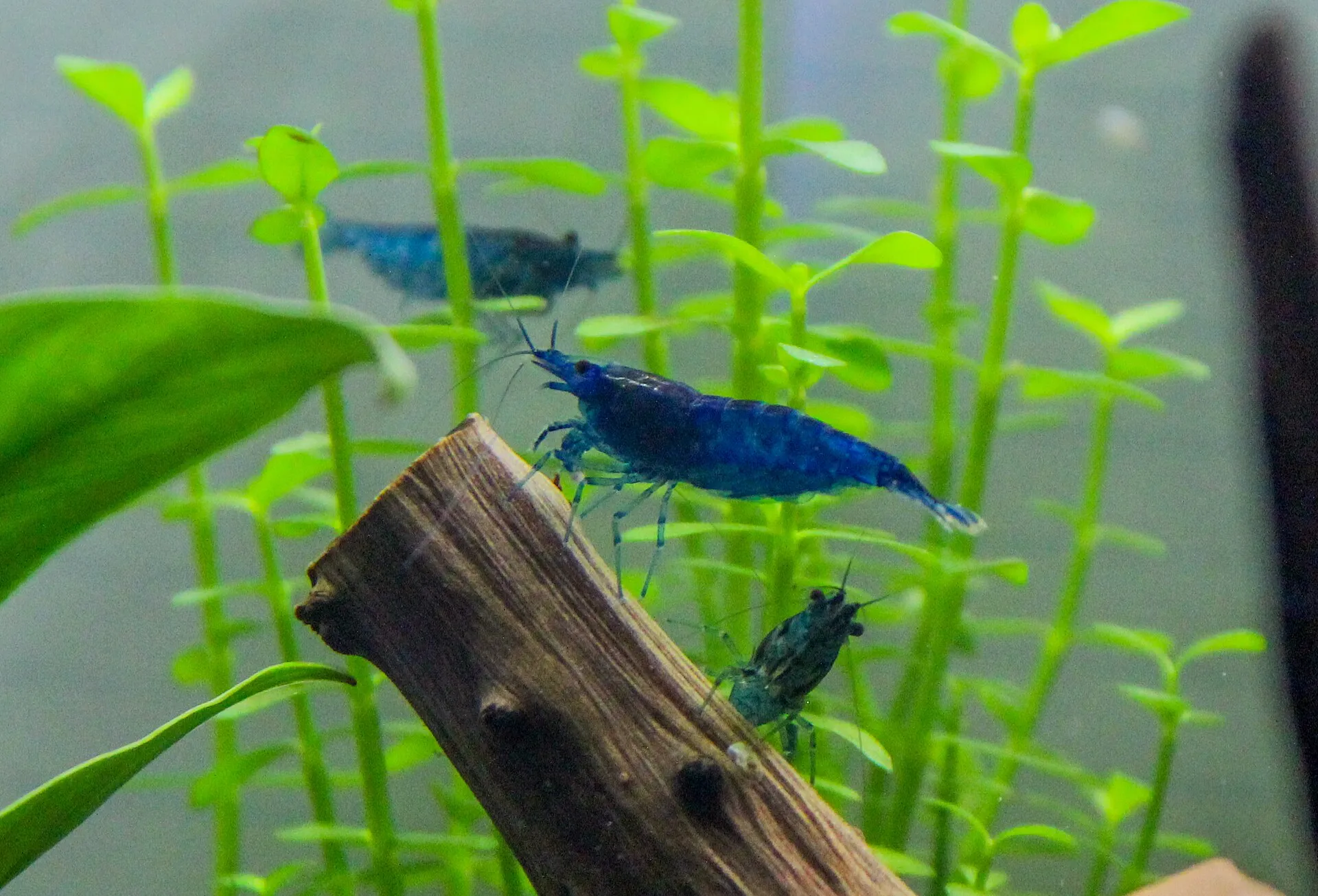
- Different cherry shrimp colors are one species and interbreed. Their offspring tend to drift back toward the wild brown look, so keep one color per tank if you care about color.
- Neocaridina and Caridina (like crystal red shrimp) aren’t known to hybridize, but they prefer different water, so one usually does poorly. See Neocaridina vs Caridina.
- Amano shrimp mix well with cherry shrimp, as above.
How to add tank mates
- Let the shrimp colony settle first. A beginner is better off with a shrimp-only tank for the first months.
- Add plenty of cover: moss, dense plants, leaf litter and caves.
- Add fish in small numbers and feed them small food, so they don’t go hunting.
- Don’t overstock. Our shrimp per gallon guide explains how much bioload a small tank can handle.
Frequently asked questions
What fish won’t eat baby cherry shrimp?
Very few. Otocinclus are the fish most often described as leaving shrimplets alone. Snails and Amano shrimp are safer still.
Can cherry shrimp live with guppies?
Adult cherry shrimp usually survive with guppies, but guppies eat many babies. It works in a heavily planted tank if you don’t need fast breeding.
Can I keep cherry shrimp with neon tetras?
Many keepers do, but neon tetras are larger than ember tetras and more likely to eat shrimplets. Thick moss helps.
What’s the best tank mate for a cherry shrimp tank?
Nerite snails and Otocinclus are the lowest-risk choices. Both eat algae and leave shrimp alone.