Amano Shrimp Care Guide: Size, Algae Eating, Tank Mates and Breeding
How to care for Amano shrimp: water parameters, tank size, how many to keep, feeding, tank mates, and why they don't breed in freshwater.
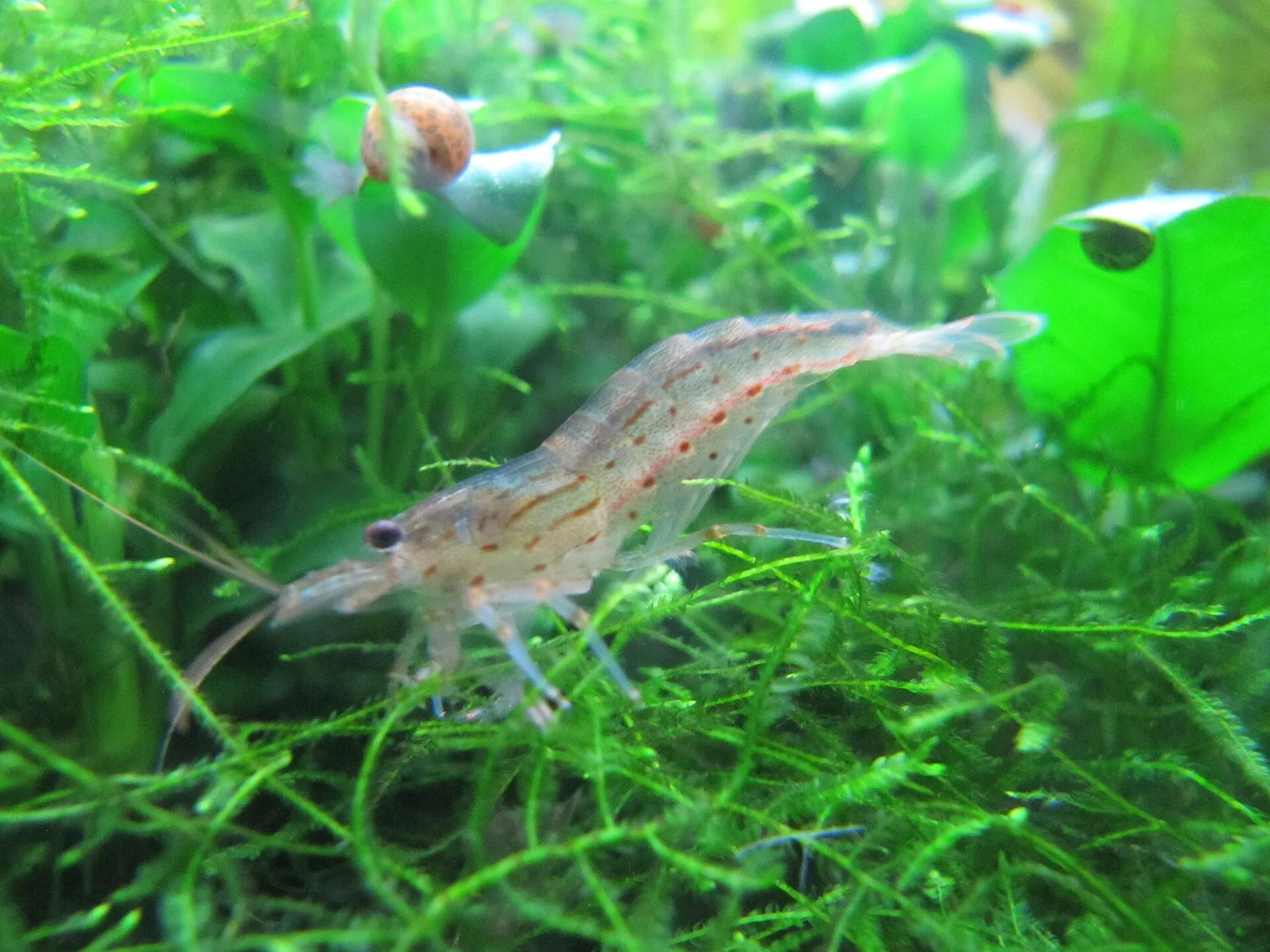 Photo: Sky99, CC BY-SA 4.0
In this guide
Short answer: Amano shrimp (Caridina multidentata) are hardy, peaceful shrimp known for eating algae. Keep them at 64–82 °F (18–28 °C) and pH 6.5–7.5 in a cycled tank of 10 gallons or more, in a group. They’re larger than cherry shrimp, which makes them safer with many fish, but they don’t breed in freshwater: their larvae need salt water to develop.
Profile
| Scientific name | Caridina multidentata (formerly C. japonica) |
| Origin | Japan and Taiwan |
| Size | Typically about 2.5–3.5 cm; larger females are often reported up to about 5 cm |
| Temperature | 64–82 °F (18–28 °C) |
| pH | 6.5–7.5 |
| Diet | Algae, biofilm, leftovers, shrimp foods |
| Breeds in freshwater? | No |
| Temperament | Peaceful |
Tank and water
- Tank size: 10 gallons (38 L) or more is a common recommendation for a group.
- Cycled tank only: ammonia and nitrite must be 0 ppm and nitrate low. See how to cycle a shrimp tank.
- Stable water: like other shrimp, they handle steady conditions better than sudden changes.
- A lid: Amano shrimp are known for climbing out of open tanks.
Amano shrimp and cherry shrimp do well in similar water, so they’re commonly kept together. See Amano shrimp vs cherry shrimp. Compare the ranges in our cherry shrimp water parameters guide.
How many to keep
A common rule of thumb is about one Amano shrimp per 2–3 gallons (8–12 L) and a group of at least 3–5. It’s a guideline from keepers, not a hard limit. A tank with lots of algae can support more; a clean tank needs extra feeding.
Algae eating and feeding
Amano shrimp are among the best-known algae eaters in the hobby. They graze on soft algae, hair algae and biofilm, and they also eat leftover food.
- In a tank with plenty of algae, they need little extra food.
- When the algae runs out, feed shrimp pellets, algae wafers or blanched vegetables a few times a week.
- They’re bold eaters and will grab food from slower tank mates.
Tank mates
Because of their size, Amano shrimp are usually safe with small, peaceful fish such as tetras, rasboras and small catfish. They’re also a common choice for betta tanks, since bettas tend to leave them alone more than cherry shrimp. See can cherry shrimp live with betta fish.
Avoid large fish that can swallow them, such as large cichlids or goldfish big enough to eat shrimp.
Breeding
Female Amano shrimp do carry eggs in a freshwater tank, but the babies don’t survive there. The species is amphidromous: the larvae hatch in freshwater, drift to the sea, develop in salt water and return to freshwater as young shrimp. Raising them at home requires moving the larvae into gradually saltier water and feeding them very small foods, which only a few hobbyists manage.
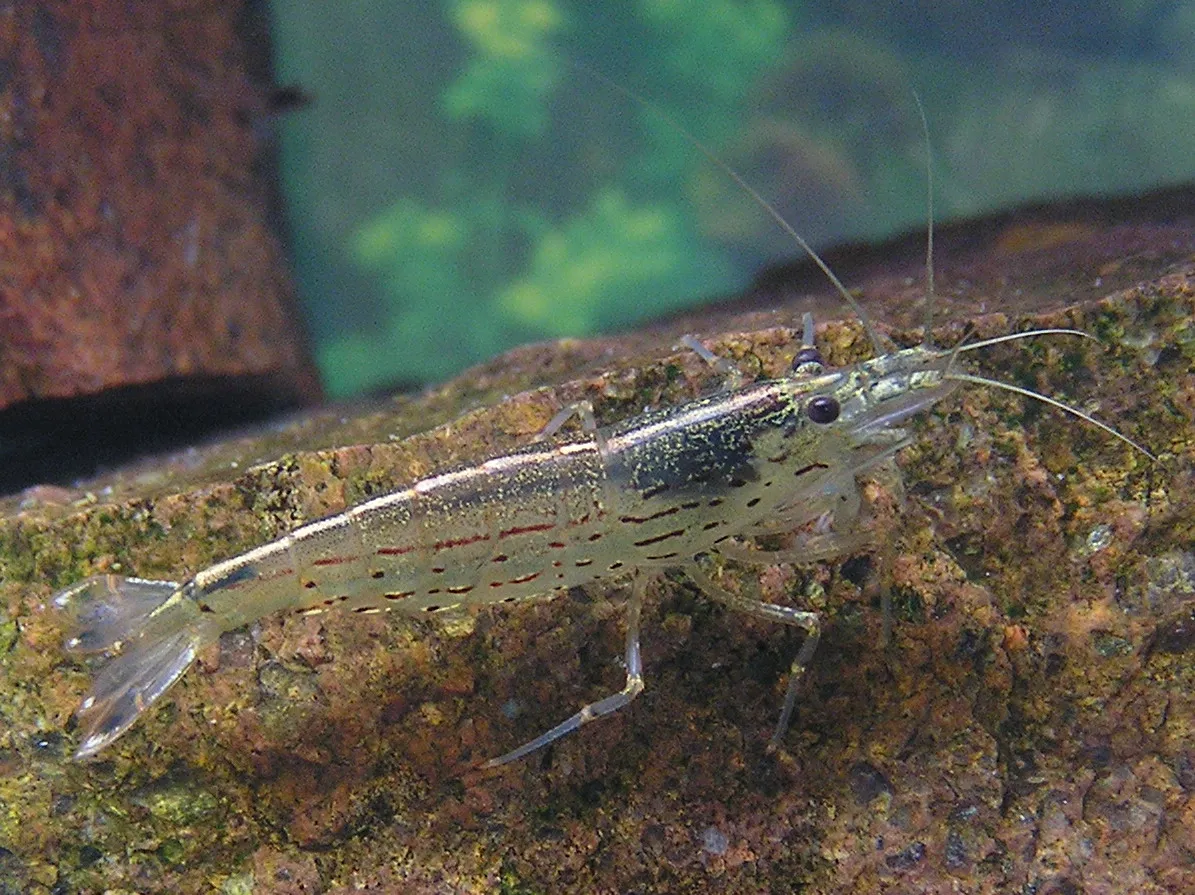
Telling males from females: females are usually larger, and the dots along their sides form longer dashes, while males have more evenly spaced, round dots.
Molting
Like all shrimp, Amano shrimp molt as they grow. A clear, empty shell in the tank is usually a molt, not a dead shrimp. If molts fail, check hardness and recent water changes in our guide to shrimp molting problems.
Frequently asked questions
How big do Amano shrimp get?
Typically about 2.5–3.5 cm, with larger females often reported up to about 5 cm.
How long do Amano shrimp live?
Keepers commonly report 2–3 years, and some live longer.
Can Amano shrimp live with cherry shrimp?
Yes. They do well in similar water and don’t harm cherry shrimp. Cherry shrimp breed in the tank; Amano shrimp don’t.
Why is my Amano shrimp trying to escape?
Climbing out often points to poor water quality or a sudden change. Test ammonia and nitrite, and keep a lid on the tank.