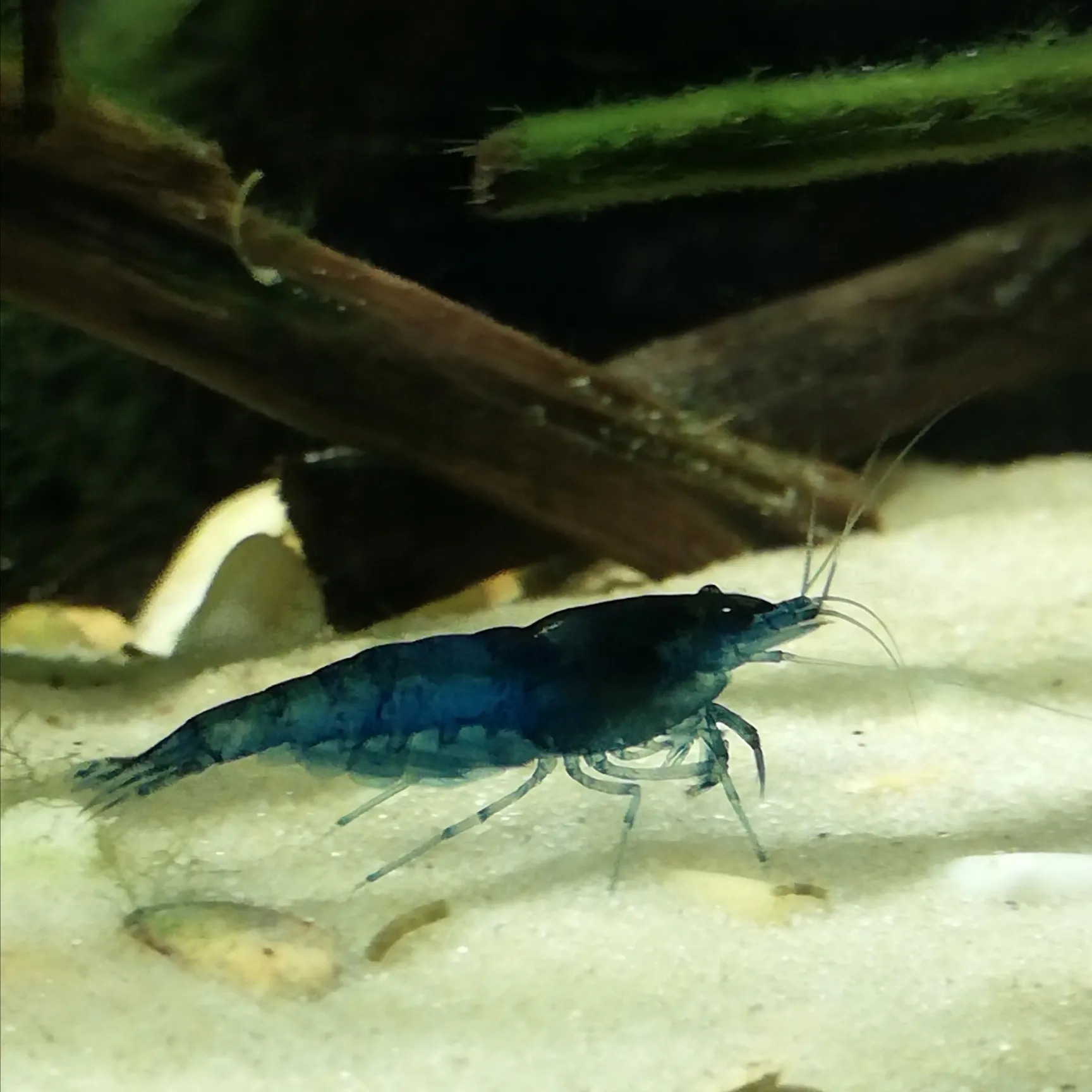
Can Caridina Shrimp Live in Tap Water?
Why most tap water doesn't suit crystal red, bee and Taiwan bee shrimp, when tap water can work, and how to make the right water with RO, a GH-only remineralizer and active soil.
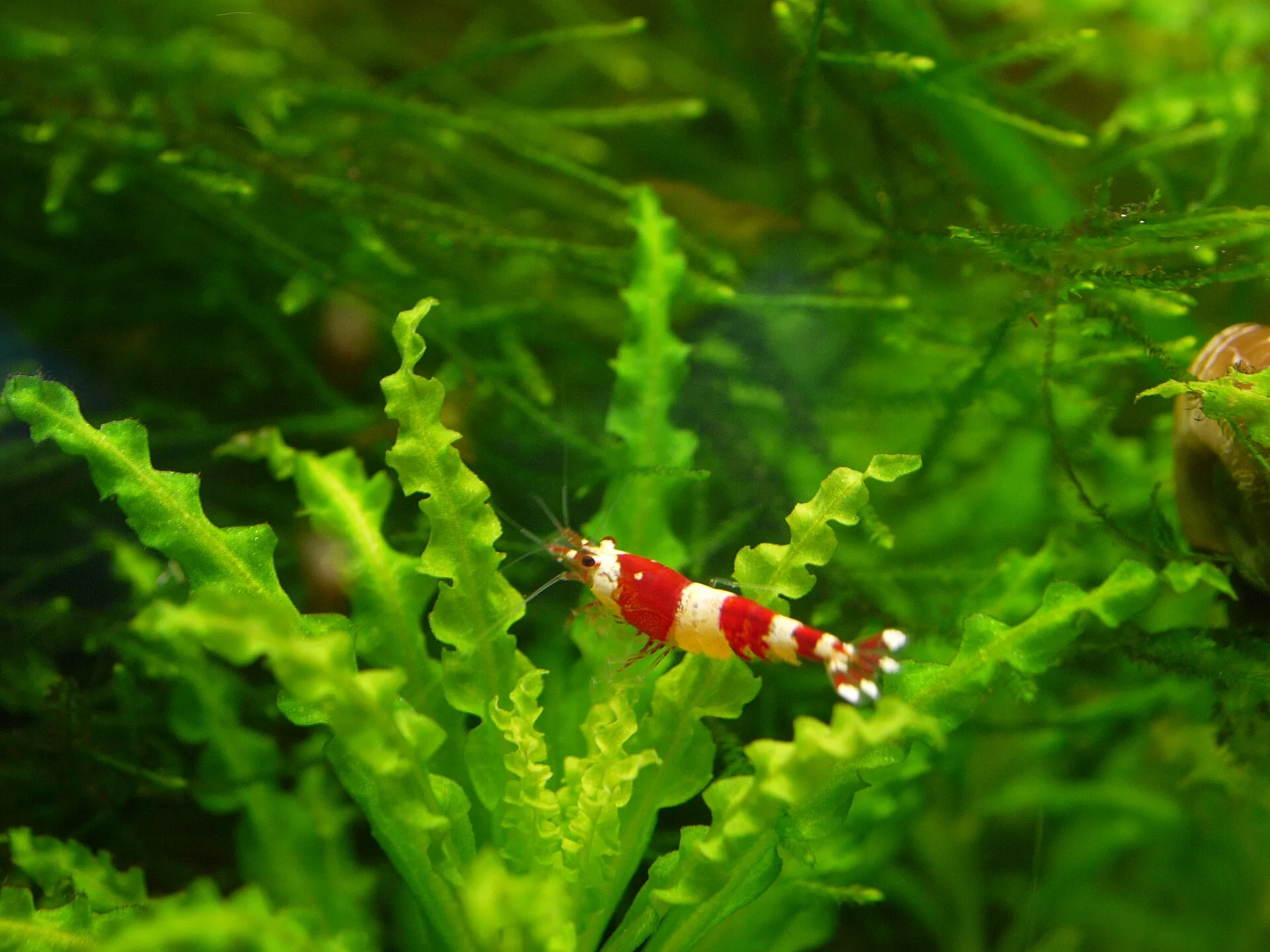 Photo: Sean Murray, CC BY-SA 2.0
In this guide
Short answer: usually no. Crystal red, bee and Taiwan bee shrimp (Caridina cantonensis / logemanni) need soft, slightly acidic water with almost no KH: roughly pH 5.5–6.8, GH 4–6, KH 0–1 and TDS about 100–160 ppm. Most tap water is harder, has more KH and changes over time. The usual solution is RO (reverse osmosis) water mixed with a GH-only remineralizer, in a tank with active soil. Amano shrimp are an exception: despite also being Caridina, they handle ordinary tap water well.
What Caridina shrimp need
| Parameter | Typical target | Range across sources |
|---|---|---|
| pH | 5.5–6.8 | 5.5–7.4 |
| GH | 4–6 | 3–6 |
| KH | 0–1 | 0–4 |
| TDS | 100–160 ppm | 80–200 ppm |
| Temperature | 68–75 °F (20–24 °C) | 68–77 °F |
The sources don’t fully agree: Shrimp Science gives pH 5.5–7.0, KH 0–2 and TDS 100–180, while The Shrimp Farm lists “general” ranges up to pH 7.4 and KH 4. All of them describe soft, slightly acidic water. Shrimp Science explains that higher KH makes molting riskier for these shrimp.
Why most tap water doesn’t work
- Too hard and too much KH. Many towns supply water with KH and GH well above what bee shrimp want. KH also fights against active soil: Shrimp Science notes that tap water with KH of 1 or more makes the soil’s buffering wear out faster.
- Chlorine or chloramine. The EPA notes that more than 1 in 5 Americans drink water treated with chloramine, which lasts longer in pipes than chlorine. Chloramine doesn’t disappear when water stands overnight, and when it breaks down it releases ammonia. A dechlorinator that also treats chloramine is a must for any tap water.
- Copper. The main source of copper in tap water is corrosion of household copper pipes; Penn State Extension notes levels are highest after water has stood in the pipes, and suggests running the tap before using it. The Shrimp Farm warns that copper is toxic to crystal red shrimp.
- It changes. Tap water can vary between seasons and even weeks. Caridina handle steady water much better than water that keeps shifting.
Shrimp Science sums it up: Neocaridina can thrive in plain tap water, but for Caridina it recommends preparing your own water.
When tap water can work
Some areas have very soft tap water, with low GH, almost no KH and low TDS. Keepers in such areas sometimes use dechlorinated tap water, raise the GH slightly with a remineralizer, and rely on active soil to bring the pH down. Others mix tap and RO water. These are keeper reports rather than tested methods, and even “good” tap water on paper can fail if it changes or contains chloramine or copper.
To find out what you have, read your water utility’s annual water quality report (it lists hardness and whether chloramine is used), and test your tap water for GH, KH, pH and TDS.
Tiger shrimp are often described as a bit more tolerant than crystal reds, but sources still recommend soft water for them, so don’t count on hard tap water.
The reliable method: RO water and a GH-only remineralizer
- Make RO or RO/DI water. It should read close to 0 ppm TDS. Distilled water works for small tanks.
- Add a GH-only remineralizer made for Caridina (for example, Salty Shrimp Bee Shrimp Mineral GH+). It adds calcium and magnesium without adding KH.
- Mix to your target GH, usually about GH 5–6. Shrimp Science notes that with GH+ each degree of GH adds about 20 ppm TDS, so GH 6 is roughly 120 ppm. Start with less than the full dose and add slowly.
- Check with a TDS meter and a GH/KH test kit.
- Use the same water for top-ups (pure RO, since evaporation leaves minerals behind) and for water changes (remineralized).
Why active soil matters
Active (buffering) soils such as ADA Amazonia or Fluval Stratum pull KH out of the water and hold the pH low and stable, usually around 5.5–6.5. Shrimp Science says they typically last about 12–18 months, possibly up to 2 years, and wear out faster with tap water. When the pH starts creeping up, the soil is exhausted. More in our guide to setting up a Caridina shrimp tank.
What about rainwater?
Rainwater is naturally soft, but it can pick up pollutants from the air, roofs, gutters and storage barrels. Some European keepers use it far from cities and industry, after the first rain has washed the roof. It’s a risky shortcut compared with RO water.
Amano shrimp: the tap-water Caridina
Amano shrimp (Caridina multidentata) are a different story. In the wild their larvae drift to the sea and come back to fresh water, and they handle a wide range of hardness. Wikipedia lists a preferred pH of about 6.5–7.5. Like all shrimp, they’re very sensitive to copper. See our Amano shrimp care guide.
For the difference between the two shrimp groups, see Neocaridina vs Caridina. For general water advice, see cherry shrimp water parameters and our water parameter checker.
Frequently asked questions
Can crystal red shrimp live in tap water?
Only if your tap water happens to be very soft, with almost no KH and no copper. In most areas, keepers use RO water with a GH-only remineralizer.
Do I need RO water for Caridina shrimp?
It’s the most reliable way to get soft, stable water. Some keepers with very soft tap water manage without it.
What is the best TDS for Caridina shrimp?
Most sources suggest about 100–160 ppm when using a GH-only remineralizer. Keep it stable rather than chasing an exact number.
Can I use tap water for water changes in a Caridina tank?
It’s not recommended. Tap water with KH shortens the life of active soil, and differences between tap and tank water can stress the shrimp.