How to Set Up a Caridina Shrimp Tank (Crystal Red and Bee Shrimp)
Step-by-step setup for crystal red, bee and Taiwan bee shrimp: tank size, active soil, cycling, RO water, target parameters, temperature, filtration, acclimation and feeding.
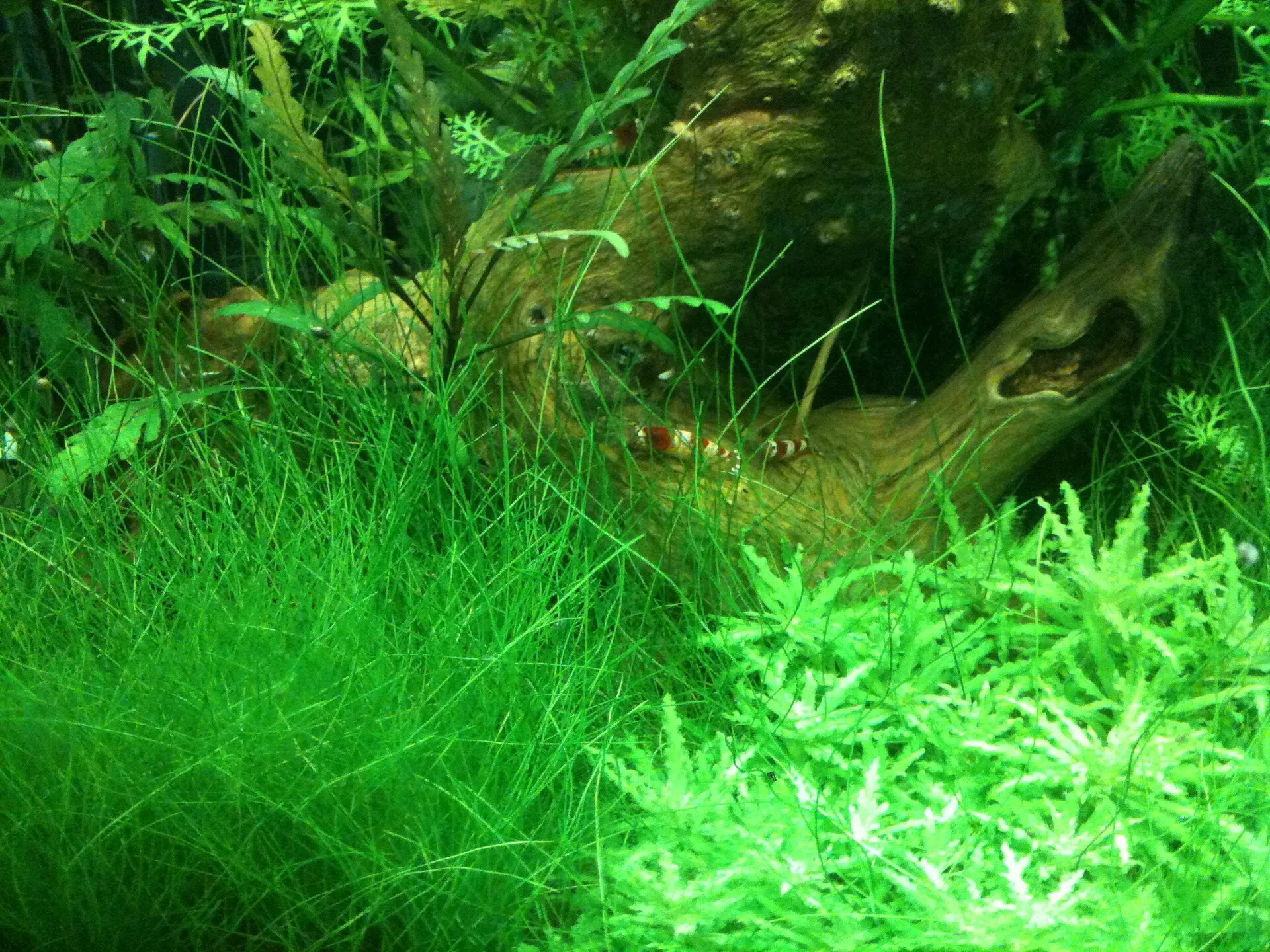 Photo: Christophe cagé, CC BY-SA 3.0
In this guide
Short answer: a Caridina tank needs soft, slightly acidic, very stable water. Use a tank of 10 gallons or more, 1–3 inches of active soil, a sponge filter, and RO water remineralized with a GH-only product to about GH 4–6, KH 0–1, TDS 100–160. Let the soil cycle until ammonia and nitrite read zero (usually several weeks), keep the temperature around 68–75 °F (20–24 °C), and drip-acclimate the shrimp slowly. Patience at the start prevents most losses.
What you need
- A tank of 10 gallons (38 L) or more. Shrimp Science gives 5 gallons as the minimum, but larger tanks stay stable more easily.
- Active soil (for example ADA Amazonia or Fluval Stratum)
- A sponge filter and air pump
- A heater if your room gets cold, and a plan to keep it cool in summer
- An RO/DI unit or a source of RO or distilled water
- A GH-only remineralizer for Caridina
- A TDS meter and GH/KH test kit, plus ammonia and nitrite tests
- Mosses and slow-growing plants, driftwood, and optionally Indian almond (catappa) leaves
Step 1: Add the active soil
Active soil removes KH from the water and holds the pH low, around 5.5–6.5, without carbonates. Shrimp Science’s tips:
- Use a layer 1–3 inches (2.5–7.5 cm) deep. Too thin and the pH swings; too thick and it can get too acidic and trap gas.
- Don’t rinse it. Rinsing breaks the grains down.
- Fill slowly, pouring water onto a plate or bag so the soil isn’t stirred up.
- Don’t dig in it later; crushed grains buffer less well.
Expect it to last about 12–18 months (Shrimp Science) to 2 years (Gensou). When the pH starts to drift upward or the grains turn muddy, it’s time to replace it.
Step 2: Fill with RO water and remineralize
Caridina need water you make yourself in most areas. Mix RO water with a GH-only remineralizer to about GH 4–6 and TDS 100–150, and don’t add KH: the soil takes care of pH. See can Caridina shrimp live in tap water? for why tap water rarely works.
Step 3: Plant and decorate
Mosses (Java, Christmas, Fissidens), Bucephalandra and Anubias are favorites: they’re slow, undemanding and give baby shrimp shelter and biofilm to graze. Driftwood and Indian almond leaves release tannins and grow biofilm. Aquarium Breeder advises against CO2 injection, which pushes pH around.
Step 4: Cycle the tank
Many active soils, especially ADA Amazonia, release ammonia when new. The Shrimp Farm measured up to 2.0 ppm from fresh Amazonia. That helps feed bacteria during the cycle, but it would kill shrimp.
How long the cycle takes is one of the biggest disagreements:
| Source | Suggested waiting time |
|---|---|
| The Shrimp Farm (with large water changes in the first days) | About 1.5–2 weeks |
| Aquarium Breeder (Amazonia) | About 1 month |
| Gensou | At least 4–6 weeks |
| Shrimp Science | At least a couple of months |
The rule they share is the important part: test, don’t guess. Add shrimp only when ammonia and nitrite both read zero for several days and the pH has settled. Seeding with filter media from an established tank speeds things up. See how to cycle a shrimp tank.
Target parameters
| Parameter | Target | Notes |
|---|---|---|
| pH | About 5.8–6.8 | The soil sets it; sources range from 5.5 to about 7 |
| GH | 4–6 | From the remineralizer |
| KH | 0–1 | Keep it near zero |
| TDS | 100–160 ppm | Shrimpy Business aims lower (80–100) |
| Temperature | 68–75 °F (20–24 °C) | Cooler is safer than warmer |
| Ammonia / nitrite | 0 | Always |
| Nitrate | Under about 10–20 ppm | Gensou and Aquarium Breeder |
Sources disagree on pH: Aquarium Breeder prefers about 6.6–6.9, while Gensou and Shrimpy Business go lower (5.8–6.5). Within that range, stability matters more than the exact value.
Temperature: keep it cool
Caridina dislike heat. Aquarium Breeder notes that higher temperatures shorten their lives, raise mortality and reduce egg survival. A heater is only needed in cold rooms; in summer, a fan blowing across the water lowers the temperature a few degrees, and a chiller is the most reliable option in hot climates.
Step 5: Add the shrimp slowly
Use drip acclimation:
- Float or pour the shrimp and their water into a clean container, with the lights off.
- Start a slow drip of tank water through airline tubing, about 1–3 drops per second.
- Continue until the water volume is about three to four times the original, typically 1.5–2.5 hours.
- Net the shrimp into the tank. Never pour the bag or store water in.
The Shrimp Farm also suggests keeping the lights off and not feeding for the first 24 hours.
How many? Start with a modest group, for example 10 shrimp in a 10-gallon tank, and let them breed. Don’t mix crystal reds with Taiwan bees or other Caridina varieties if you want to keep pure lines; they interbreed.
Feeding
Biofilm is the main food in a mature tank. Feed sparingly, about 2–3 times a week, only what’s eaten within a few hours, and use a feeding dish so leftovers don’t rot in the soil. Calcium-rich foods support molting. See how often do shrimp molt.
Water changes
- Change about 10–15% at a time (Gensou), weekly or every two weeks.
- Use remineralized RO water that matches the tank’s TDS and temperature.
- Drip it in slowly rather than pouring.
- Top up evaporation with plain RO water, since minerals stay behind when water evaporates.
Common mistakes
- Adding shrimp before the soil has finished leaching ammonia
- Using tap water or a GH/KH remineralizer that adds KH
- Rinsing or stirring the active soil
- Overfeeding, with food rotting in the soil
- Big, sudden water changes that cause failed molts (see shrimp molting problems)
- Keeping the tank too warm
Frequently asked questions
What substrate do Caridina shrimp need?
An active (buffering) soil such as ADA Amazonia or Fluval Stratum, about 1–3 inches deep. It keeps the pH low and stable.
How long should I cycle a Caridina tank?
Until ammonia and nitrite read zero, which can take from about two weeks to two months depending on the soil and method. Testing matters more than the calendar.
What temperature is best for crystal red shrimp?
About 68–75 °F (20–24 °C). They do poorly in warm water.
Can I put Caridina and Neocaridina in the same tank?
It’s not recommended. They need different water, so one group will always be stressed. They don’t interbreed, though.
Sources
- Crystal red shrimp (Shrimp Science)
- Active substrates for bee shrimp (Shrimp Science)
- Drip acclimation (Shrimp Science)
- Crystal red shrimp detailed guide (Aquarium Breeder)
- Caridina shrimp care guide (Gensou)
- Cycling ADA Aqua Soil Amazonia (The Shrimp Farm)
- Acclimating shrimp (The Shrimp Farm)
- Crystal red shrimp care guide (Shrimpy Business)